

#FORGESOFT Editor

Most products don’t fail because of bad ideas. They fail because they never make it out of planning and execution. XForge could have been one of those.
Instead, it shipped.

The Starting Point and Where Teams Usually Get Stuck
When we first started working with XForge, the founders’ vision was ambitious. We set out to build a smartphone that doesn’t just run apps, but contributes to a decentralized network, with AI running directly on the device. It sounded great on paper. In reality, it meant juggling hardware constraints, on-device AI performance, backend infrastructure, real-world production timelines, and, most importantly, speed.
Because in hardware, every delay compounds: delayed product → delayed feedback → delayed distribution → lost momentum
We’ve seen this pattern many times: Idea → Architecture → More Architecture → Refinement → Delay → Rework → (Still not shipped). Everything looks “almost ready” — but nothing is actually live.
XForge didn’t want that. What We Did Differently?
Instead of optimizing for perfection, we optimized for getting something real into users’ hands — fast. Here’s how the execution actually looked.
🧱 Step 1 — Strip It Down to What Matters
When we start any project, we should answer a few simple questions that define the path forward and set expectations for partners and customers.
- What must exist for the product to work?
- What can wait?
- What can be simplified?
Having worked on other crypto and AI projects, the team was skeptical of “perfect” solutions. Instead, they focused on the shortest path forward, accounting for today’s hardware challenges, including rising component costs and other real-world production constraints. That approach gave us a plan that paid off nicely:
[Original Vision] Hardware + AI + Infra + Ecosystem + Rewards + Scale
↓
[First Ship Version] Hardware + Core Features + Basic Infra
That was a very hard decision because we never wanted to compromise on standards or quality controls across production and the supply chain. International certification, safety, software security, ecosystem integrity with other Android packages, and collaboration with Google on core software were all critical pieces the team still had to deliver, even while pursuing the fastest possible go-to-market plan.
🤖 Step 2 — Designing and Prototyping
The team invested heavily in industrial design, exploring multiple prototype directions to refine every aspect of the device. The goal was to strike the right balance between a sleek exterior that people would actually want to use, thoughtful software-driven functionality, and a build that felt secure, practical, and polished.
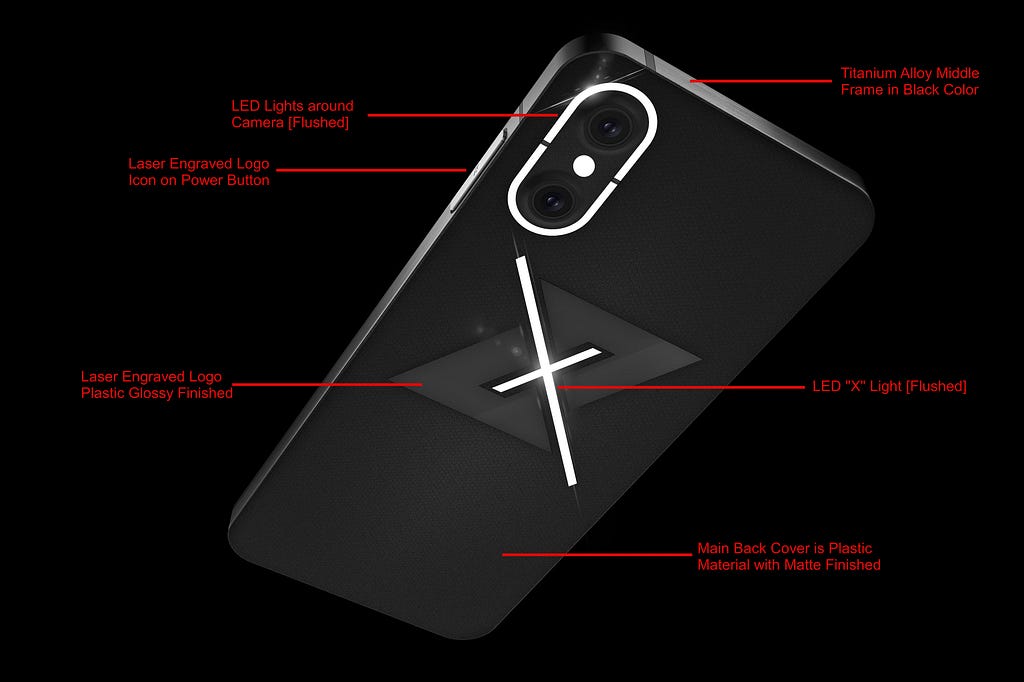
When it comes to prototyping, it is important to find the right foundational partner. The team had to engage dozens of different partners to produce the phones. We visited multiple component factories and screen producers. We had a very bad experience with some of them, which set us back.
We also had to account for how work in China differs and how the supply chain operates there. For prototypes, we built an early version that was ultimately scrapped and will never be released. But here you can see a photo of the device.
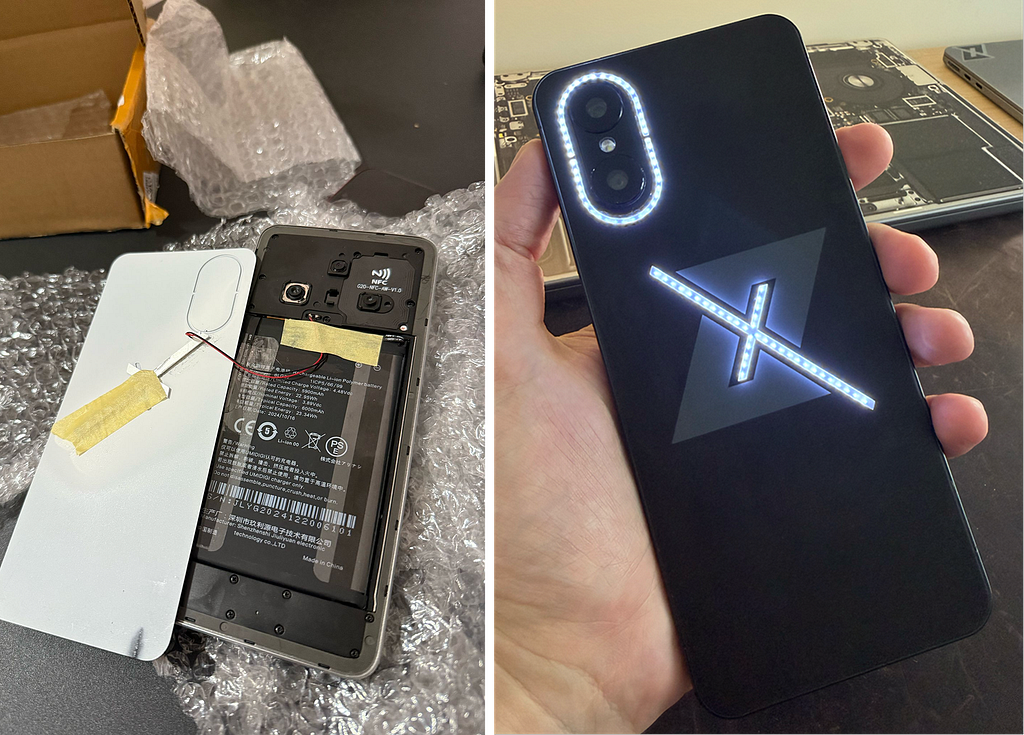
🏭 Step 3 — Manufacturing
We will not walk through every step of the manufacturing and assembly process here, but a few lessons from the production phase are worth highlighting. Component selection is one of the biggest drivers of quality, reliability, and compliance. Key modules and chips, including GSM, Wi‑Fi, and GPS, need to be chosen carefully, with certification requirements and regional standards mapped early based on the countries where the device will be sold and used.
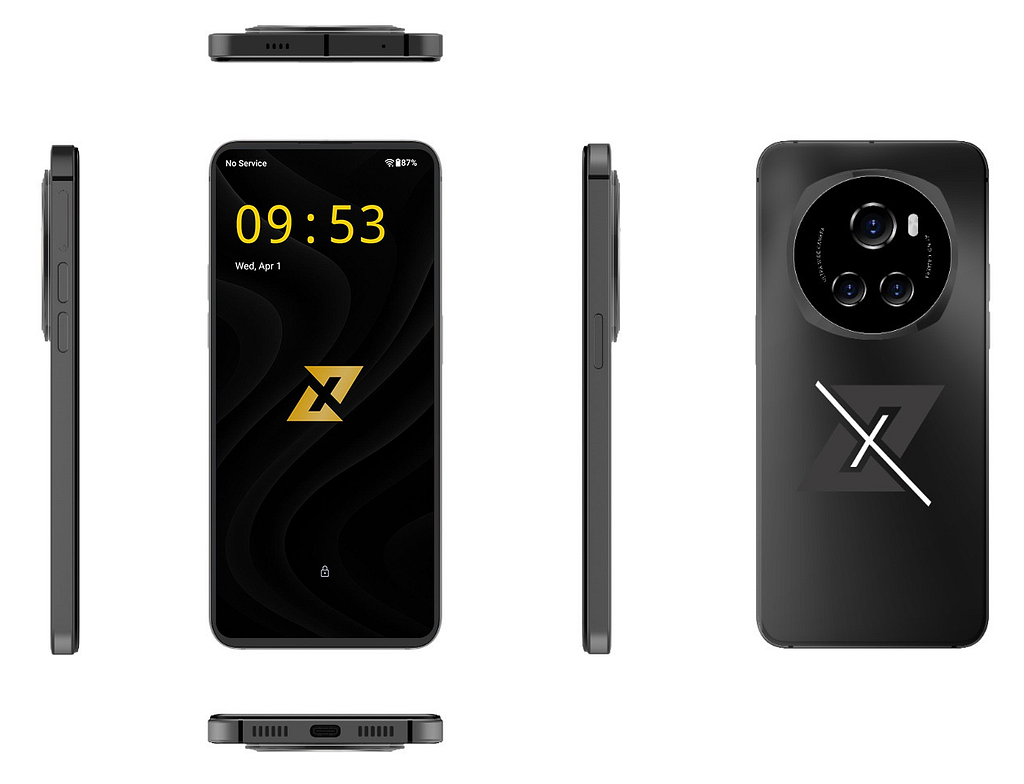
Materials and mechanical decisions also have a direct impact on both the final price and the cost of production. That means designing around real user needs, not assumptions. Is the phone primarily for gaming or for work. Do users need dual SIM support. Is expandable storage with an SD card important. Each of these choices affects the bill of materials, the internal layout, and how the device performs in daily use.
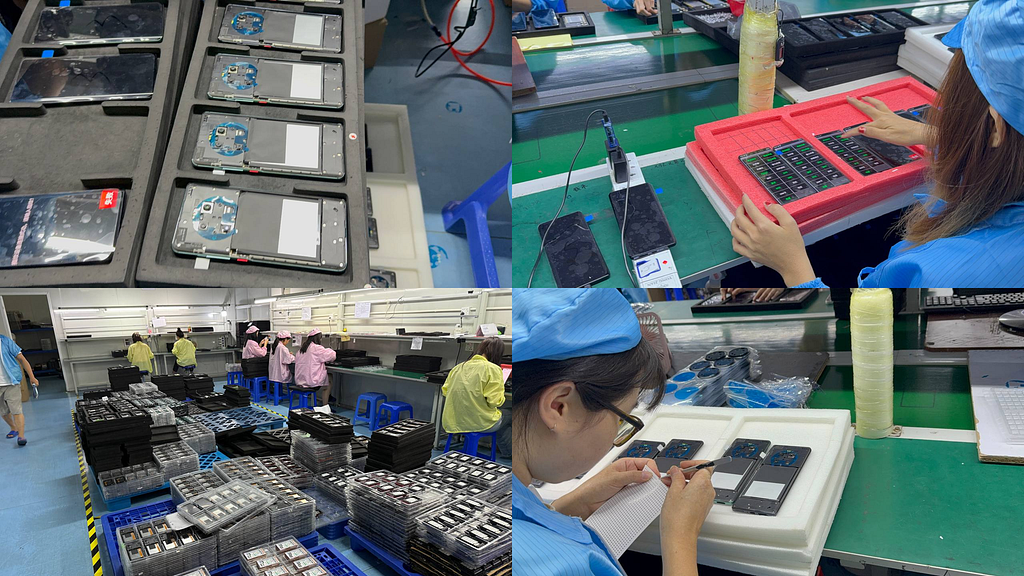
Photos from the production pipeline, showing how the build process reflected early feedback from users and founders, and how the team executed with precision as the design moved from prototype to a repeatable manufacturing run.
🔗 Step 4 — Connect AI DePIN Device to the Infrastructure Early
FORGESOFT’s advantage over most hardware manufacturers was a deep bench of software talent, with real experience shipping AI features and crypto integrations. From the very beginning, the team focused on defining the tools and experiences that would be available to owners on day one, rather than treating them as “nice-to-haves” for a later release.
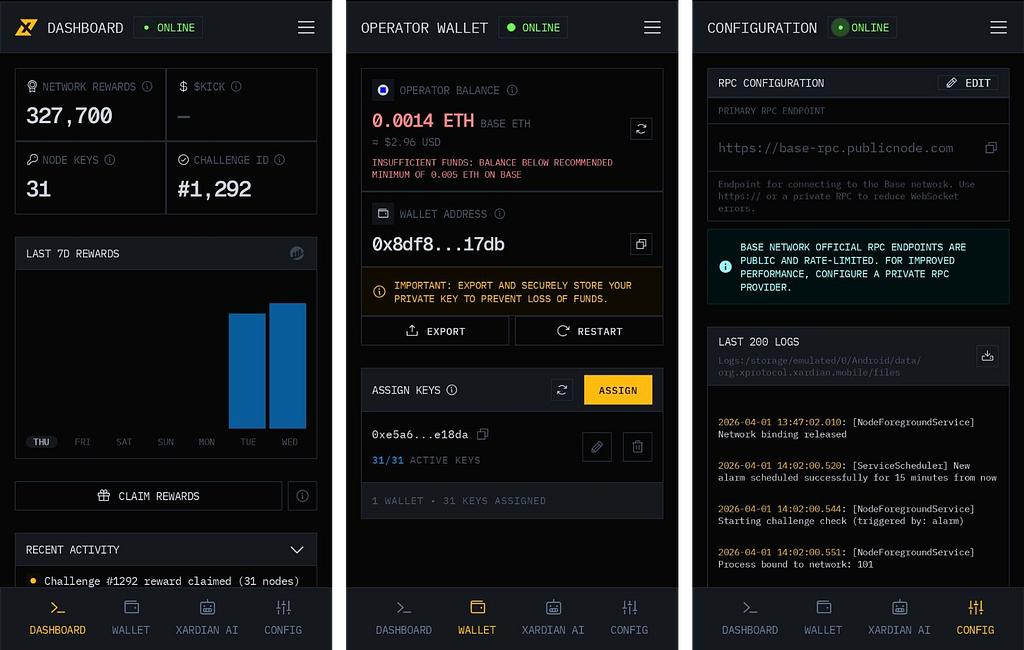
Working closely with XForge’s leadership, we designed and iterated on the Xardian node application, which became the connective tissue between the device, the network, and the broader ecosystem. More than a technical component, it provided a clear, user-friendly bridge for people who were curious about crypto but not yet fluent in it, making the value of owning the device easier to understand and participate in.
The Xardian application plays multiple roles in the ecosystem. It constantly runs nodes that users receive for free through the XProtocol ecosystem. It also serves as an access point for non-crypto-native customers, simplifying onboarding and use of decentralized private infrastructure and the broader crypto ecosystem. We designed the software to minimize friction during onboarding and to simplify access to the wallet, which is created on the device during the initial setup.
Multiple technical issues had to be addressed while building this device: how to secure it, how to ensure the application is bound to the physical device, how to prevent man-in-the-middle attacks, and how to protect private keys stored on the device while still allowing users to back them up for future use.
The application also includes built-in artificial intelligence functionality, which will be available to a broader audience in the first iterations of the phone.
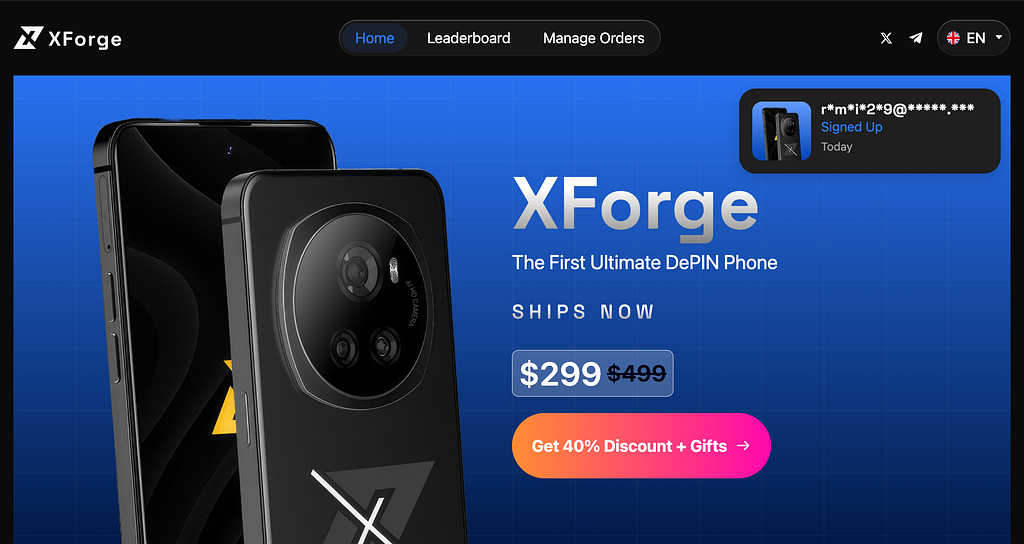
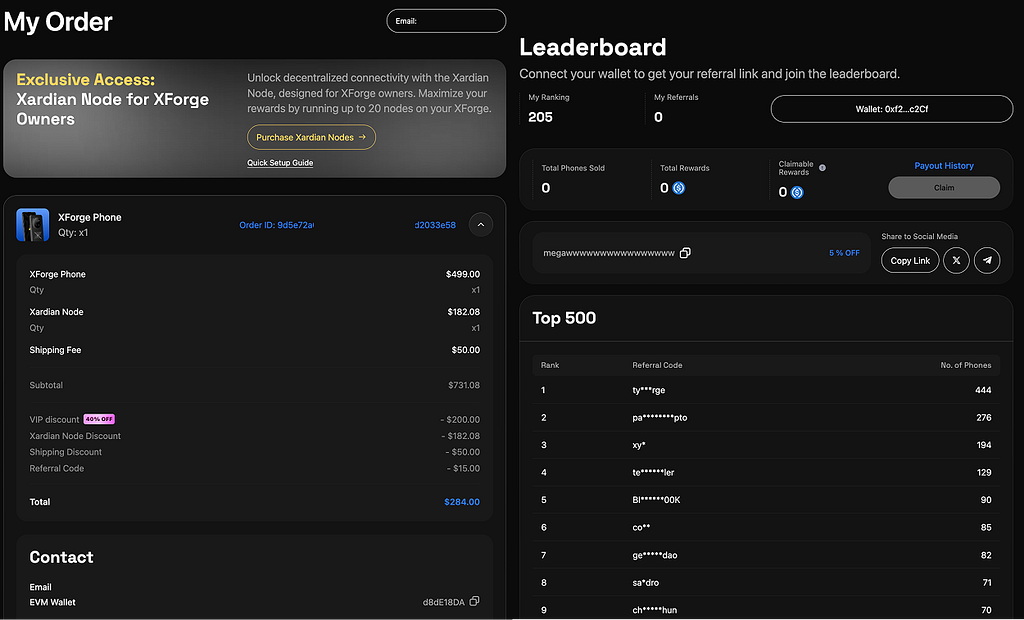
The website was designed with best-in-class Web3 and DePIN practices in mind. It includes a full set of e-commerce tools for delivery, order placement, and order management. It also includes a built-in referral program. Everyone who participates can claim rewards for device sales through the links they share on social media. (Here’s ours with 5% discount)
🚀 Step 5 — Ship Before It Feels Ready
Instead of falling into the vicious cycle of refining the device and embedded software, we chose the fastest path that would let us ship. Looking back, we realized that the hesitation that keeps many teams from delivering a 95% ready phone, in an attempt to make it perfect, often kills the business.
There are many examples of this on Kickstarter, and we did not want to follow that path. So we stuck to a strict timeline and the principles we set for ourselves from the start.
Another real-world challenge is dispatching physical devices. We had orders from dozens of countries, each with different rules and regulations. Some places are easy to reach with express delivery. Others require careful adjustments and coordination. XForge buyers, were informed at every step of the journey and our progress.
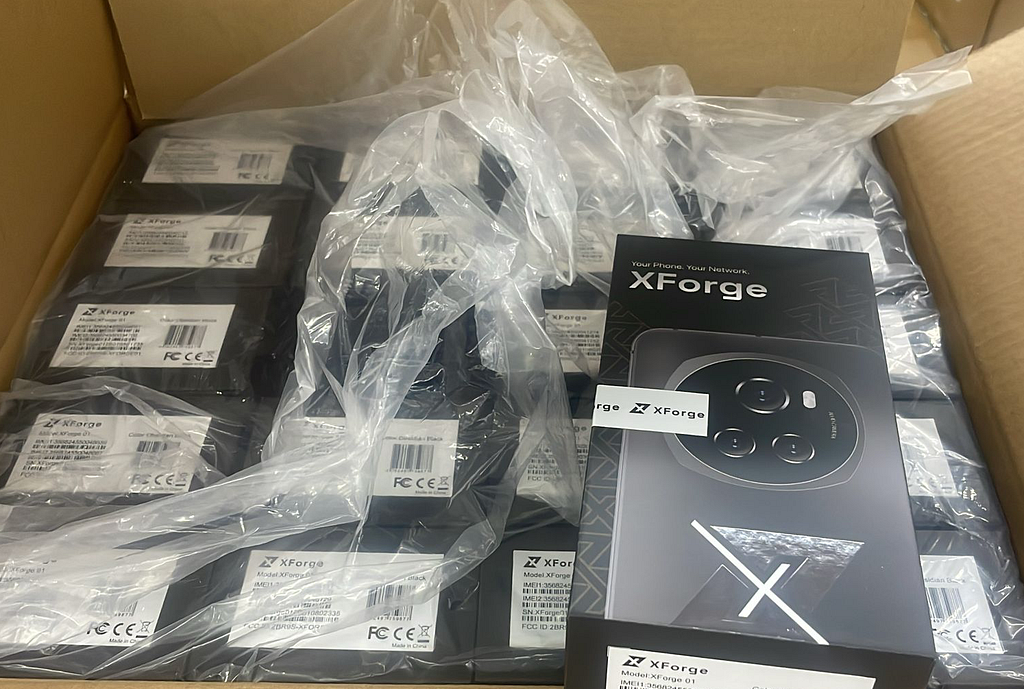
Even with a couple of setbacks, we ultimately delivered a great product. It may not be perfect at this stage, but it is open to innovation and improvement through software and hardware.
The Impact
- 3,000+ devices shipped globally and keep selling
- Faster iteration cycles with real user feedback
- Reduced engineering bottlenecks
- And most importantly 👉 The team started operating on real signals, not assumptions
“FORGESOFT helped us move from concept to production in weeks, not months. They built key AI-driven features on-device and got us to a working product fast.” — Roselle S., Head of Product, XForge
The Real Lesson
Building a hardware DePIN AI product is hard. But what slows teams down isn’t just complexity. It’s hesitation.
PS
Follow FORGESOFT’s LinkedIn / Medium
or Talk to us to learn more
XForge AI DePIN Phone — The Story Behind. From Idea to Shipping was originally published in #FORGESOFT on Medium, where people are continuing the conversation by highlighting and responding to this story.


